


How to Spot Facts in the Digital World – Printable & Digital Critical Thinking Guide for Students (PDF)
Every day, students in India receive dozens of WhatsApp forwards, social media posts, news headlines, and online videos — and not all of it is true. Fake news, misleading information, paid opinions disguised as facts, and media bias are everywhere. Without the right skills, it is very easy to believe and share something that is completely wrong. How to Spot Facts in the Digital World is a comprehensive, student-friendly digital guide that teaches young learners exactly how to think critically, question what they read, and separate real facts from opinions and misinformation.
This guide goes beyond just saying “don’t believe everything online.” It teaches students a clear, practical set of skills — how to identify the language of facts versus opinions, how to verify information before sharing it, how to recognise media bias, and how to become a responsible and confident digital citizen. All concepts are explained using simple language and real-life Indian examples that students can immediately relate to.
Whether you are a parent who wants to protect your child from online misinformation, a teacher looking for a critical thinking and media literacy resource, or a student who wants to get better at spotting what is real and what is not, this printable PDF is an essential guide for the digital age.
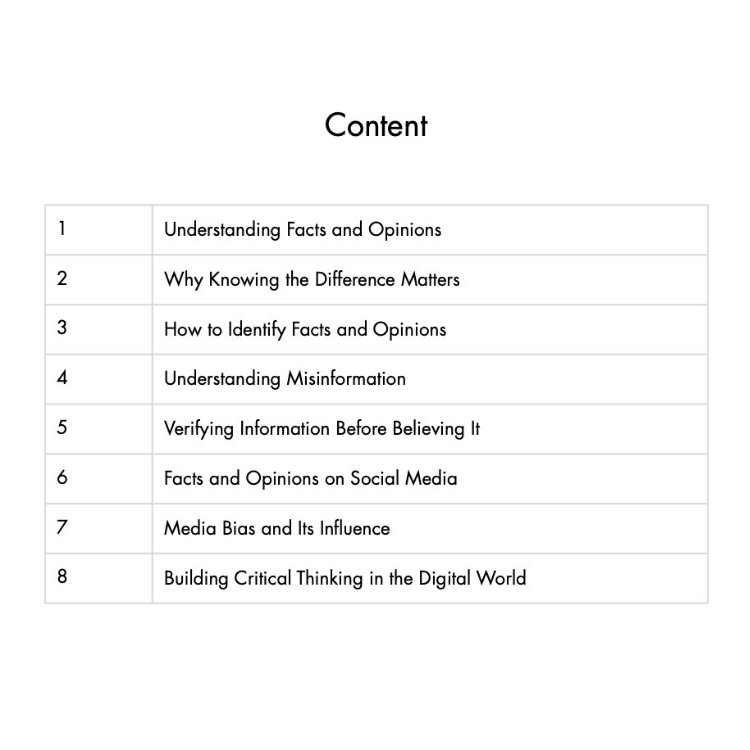
What is covered inside? (8 detailed chapters)
- Understanding facts and opinions — what facts and opinions are, how to tell them apart, and why mixing them up causes confusion in the digital world
- Why knowing the difference matters — how mistaking opinions for facts leads to panic, fake news, wrong decisions, and how this skill protects students in everyday digital life
- How to identify facts and opinions — practical language clues to spot facts and opinions in online posts, news headlines, and social media content
- Understanding misinformation — what misinformation is, how it spreads through forwarded messages, fake videos, and edited photos, and why it uses fear and shock to grab attention
- Verifying information before believing it — how to check trusted sources like government websites and reliable news channels, why images and videos need verification too, and when to ask a trusted adult
- Facts and opinions on social media — how influencer posts, paid promotions, and social media algorithms can make opinions feel like facts, and how to use social media wisely
- Media bias and its influence — what media bias is, how different news channels present the same story differently, and why checking multiple sources is the key to balanced thinking
- Building critical thinking in the digital world — how to ask the right questions before believing or sharing anything online, and how critical thinking helps students in studies, discussions, and future careers
Includes a 20-question practice paper and answer key
Reinforce learning with a ready-to-use MCQ question paper covering all 8 chapters — 20 questions, 40 marks total. Perfect for self-assessment, classroom tests, or home practice. The complete answer key is included for instant checking.
Who is this for?
This guide is ideal for students in classes 5 to 10, parents who want to help their children navigate the internet more safely and wisely, teachers and school counsellors looking for a media literacy or critical thinking resource, and anyone in India who regularly uses social media, WhatsApp, or online news platforms. It is also a valuable supplement for students preparing for GK rounds, digital literacy assessments, or any exam that covers media awareness, fake news, or online responsibility topics.
Why choose this digital guide?
- Written in simple, jargon-free language with real-life examples students can immediately connect with
- India-specific content covering WhatsApp forwards, social media algorithms, media bias in Indian news, and online misinformation patterns
- Uses fun everyday comparisons like cricket scores and school timetables to make abstract concepts easy to understand
- Teaches practical, lifelong critical thinking skills that go beyond the internet — useful for studies, debates, and future careers
- Covers facts, opinions, misinformation, verification, social media, media bias, and critical thinking all in one guide
- Instant PDF download — no waiting, no shipping
- Print as many times as you need — one purchase, unlimited use
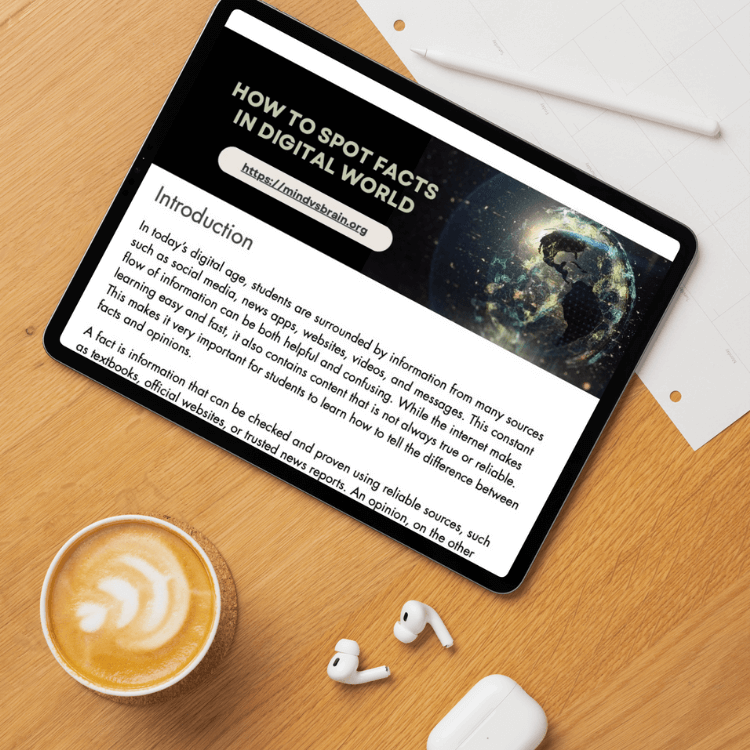
- Compatible with GoodNotes and Notability for digital annotation on iPad
- A4 print-ready format — clean and professional output every time
Important — Please Read Before Purchasing
This is a digital product. No physical item will be shipped. Upon completing your purchase, you will receive an instant download link to access your PDF file. You can print it at home or at a print shop, or use it digitally on any device including tablet, phone, or laptop.